


Dijon
Dijon in Burgundy has one of the most preserved sectors of France. Known across the world, its patrimony has been built throughout the centuries and continues to build itself today with public edifices like the Zenith of the Auditorium or through high-technology building like the Elithis Tower.
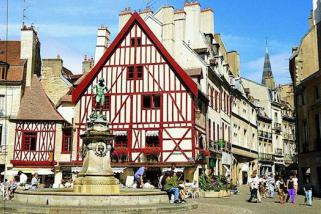
The «old Dijon» or historical center holds numerous ancient houses, parliamentary hotels, town houses but also more modest homes that give an incomparable charm to the streets of the town center. Most of those monuments date back to the Middle Ages.
Modern realizations of the 19th century, of «hausmannien» type, complete the Dijon's patrimony. The progressive rehabilitation of most of those historical houses and the development of a pedestrian area, that is in constant extension since the 70's, today allows the habitants of Dijon as well as the visitors to enjoy this rich heritage that integrates in a departmental and regional tourism, around the wine and medieval heritage. It was described as the "town of a hundred bell towers" by Henri IV or Francis I of France.
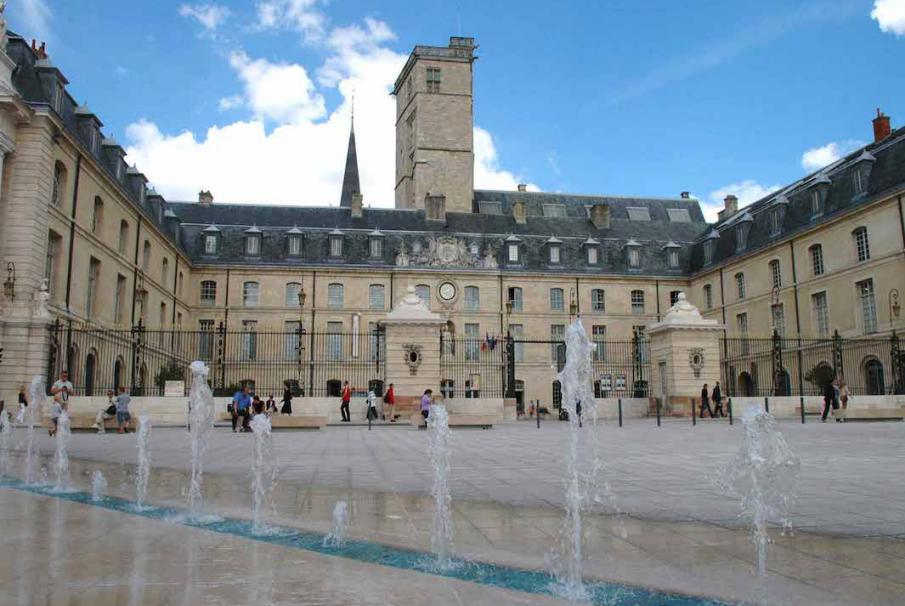
The religious edifices indeed reflect of a religious and architectural past, punctuate the town center. The Dukes Palace and States of Burgundy today shelters the Fine Arts Museum and the town hall. In front of the palace, there is the "place de la Libération" (Liberation Place) of a semicircular form, conceived by Jules Hardouin-Mansart in 1680. The Saint-Bénigne Cathedral built at the 13th and 14th century, shelters in its crypt, the only vestige of a roman rotunda destroyed in 1792, the vestiges of the tomb of the eponymous martyr, evangelist of Burgundy.
The Notre-Dame Church of the 13th century, a true Burgundy gothic masterpiece is unique in the French gothic architecture. The beginning of its tower supports the Jacquemart, a clock with four 98 controllers. The habitant of Dijon are accustomed to stroke the owl sculpted on the buttress of a chapel of Notre Dame (Our Lady). According to the legend, a left hand's stroke, on the heart's side, will bring luck to whoever will touch it. The Millière House and the Vogüe Hotel are found at the back of the church in the "rue de la Chouette". From the ancient Chartreuse de Champmol, on the site of which today we can discover the psychiatric hospital, the Moïse well that was sculpted by Claus Sluter at the end of the 14th century and the portal of the chapel.
Bontourism®, the Art of Traveling to Dijon in Bourgogne
Our partners around
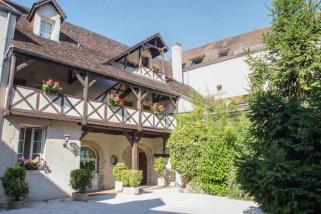
Hôtel Wilson, Dijon ***
Bourgogne (Nord-est)
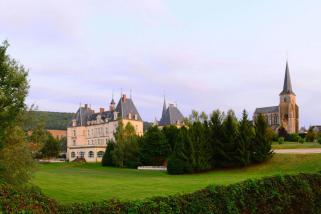
Château de Sainte-Sabine ***
Bourgogne (Nord-est)
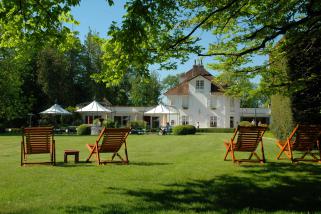
Hostellerie de Levernois *****
Bourgogne (Nord-est)
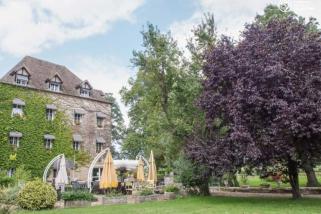
Moulin d'Hauterive à Saint-Gervais-en-Vallière ***
Bourgogne (Nord-est)
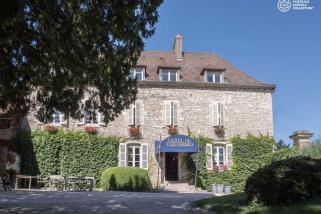
Castel de Très Girard à Morey-Saint-Denis ****
Bourgogne (Nord-est)
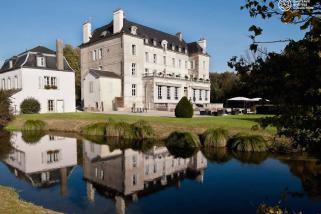
Château de Saulon à Saulon-la-Rue ***
Bourgogne (Nord-est)
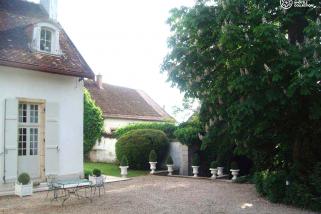
Château du Petit Musigny à Chambolle-Musigny ****
Bourgogne (Nord-est)
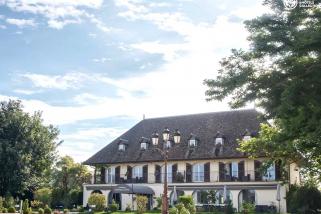
Ermitage de Corton, Chorey-lès-Beaune ****
Bourgogne (Nord-est)
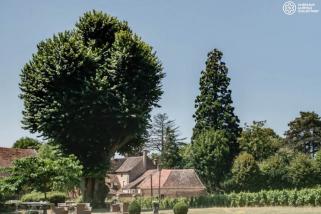
Hôtel Villa Louise à Aloxe-Corton ***
Bourgogne (Nord-est)